
Wood in Commercial Interiors: A Sustainable Choice for Architects and Specifiers in Ireland
Updated: Feb 27

Reference: *Ondarreta
The design of commercial interiors in Ireland has evolved significantly over the past two decades. Open-plan offices, collaborative work environments, flexible breakout spaces, and hospitality-led workplace design have reshaped how furniture is specified and experienced. This evolution has placed renewed focus on commercial furniture for collaborative workspaces and hospitality interiors in Ireland, where material choice plays a key role in shaping both performance and atmosphere. Amid changing trends in colour, form, and layout, one material has remained remarkably consistent in its relevance: wood.
From breakout tables in offices to communal dining tables in restaurants, cafés, and hotels, timber continues to play a central role in loose commercial furniture. Its endurance is not simply aesthetic. Wood offers a rare combination of structural performance, adaptability, sensory warmth, and sustainability, making it particularly suited to high-use commercial environments across Ireland’s office, workplace, and hospitality sectors.
The Role of Loose Commercial Furniture in Modern Workplace and Hospitality Design
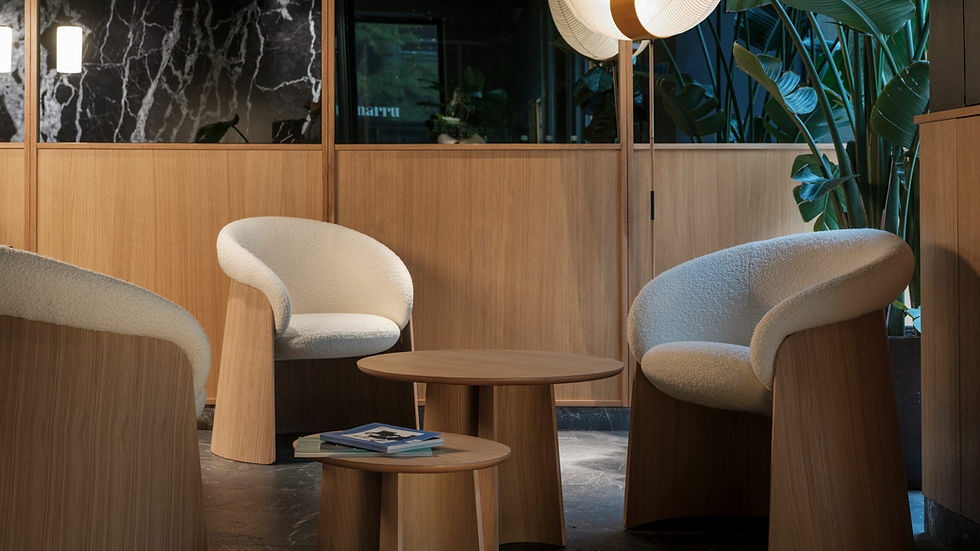
Reference: *Ondarreta
Loose furniture has become an essential tool in shaping contemporary commercial interiors. Unlike fixed joinery, tables, chairs, benches, and soft seating can be reconfigured as work patterns evolve. This flexibility is central to the way modern offices, co-working environments, breakout spaces, and hospitality interiors are designed today.
In Irish workplaces, loose commercial furniture supports:
Informal collaboration in breakout and social spaces
Agile working and flexible layouts
Hybrid work environments that blur the line between office and hospitality
Multi-functional spaces used for meetings, workshops, and social interaction
Material choice plays a crucial role in how these spaces are perceived and used. Wood, in particular, offers a sense of permanence and groundedness in otherwise fluid environments, helping to anchor spaces that are designed to change over time.
Wood as a Material: Performance, Warmth, and Longevity in Commercial Interiors

Reference: *Ondarreta
Timber occupies a unique position in commercial interior design. Unlike many synthetic materials, wood combines emotional warmth with technical performance. It brings tactility and visual depth to spaces while also delivering durability suitable for high-traffic commercial settings.
In offices, hospitality venues, and restaurants across Ireland, wood is valued for:
Its ability to withstand daily use when properly specified
The way it softens large open-plan environments
Its compatibility with both contemporary and traditional interior styles
Its capacity to age gracefully, developing character over time
This dual role—emotional and functional—makes timber particularly relevant in workplaces seeking to feel more human, less institutional, and more connected to domestic or hospitality environments.
Engineered Timber: How Modern Processing Enhances Durability and Stability
While wood is often perceived as a “natural” material, contemporary commercial furniture relies heavily on engineered timber construction to achieve performance standards suitable for offices, meeting rooms, restaurants, and hospitality environments.
Modern loose commercial furniture frequently combines:
Solid wood elements for structural strength and tactile quality
Plywood or laminated cores for dimensional stability and resistance to warping
CNC machining and controlled bending techniques to achieve refined forms
Hybrid structures that integrate timber with steel subframes for longer spans and greater load-bearing capacity
These layered constructions allow designers and manufacturers to retain the visual and sensory qualities of wood while overcoming the natural movement and limitations of solid timber alone. In practice, this means commercial tables and seating can remain stable and durable in Ireland’s variable indoor climates, where temperature and humidity can fluctuate across seasons.
Timber in Commercial Furniture for Collaborative Workspaces and Hospitality Interiors in Ireland

Reference: *Ondarreta
Breakout spaces and informal collaboration areas are now core components of workplace design in Ireland. These spaces are often intended to feel less formal than traditional meeting rooms, encouraging spontaneous interaction, creativity, and social exchange.
In this context, the specification of commercial furniture for collaborative workspaces and hospitality interiors in Ireland increasingly prioritises durability, flexibility, and material quality, as these spaces are subject to constant reconfiguration and high levels of daily use.
In practice, this means selecting commercial furniture for collaborative spaces that performs equally well in workplace breakout areas and hospitality interiors.
Wood plays an important role in shaping the atmosphere of these environments:
Timber surfaces introduce warmth and tactility into shared spaces
Wooden tables and seating visually differentiate breakout zones from task-focused workstations
Natural materials help reduce the perceived formality of corporate interiors
Wood in Hospitality and Restaurant Furniture: Balancing Aesthetics and Performance

Reference: *Ondarreta
In hospitality and restaurant interiors, material performance is tested even more intensively. Furniture must withstand frequent use, cleaning regimes, movement, and occasional impact while maintaining its appearance over time.
Wood continues to be specified widely in Irish hospitality interiors because it offers:
Visual warmth that complements social dining environments
A material language associated with craft, quality, and authenticity
The ability to be refinished, repaired, and maintained over long lifecycles
When paired with appropriate finishes and construction methods, timber tables and seating can perform reliably in high-traffic restaurants, cafés, and hotel environments, supporting both the functional demands of hospitality operations and the experiential qualities of the interior design.
Sustainability and Certified Timber in Commercial Furniture Specification

Reference: *Ondarreta
Sustainability is now a central consideration in commercial interior design in Ireland. As embodied carbon, material sourcing, and lifecycle impact become more prominent in specification decisions, timber offers several environmental advantages when responsibly sourced.
Key sustainability considerations include:
The use of PEFC or FSC certified wood from responsibly managed forests
The long service life of well-constructed timber furniture
The potential for repair, refinishing, and reuse
Lower embodied carbon compared to many high-impact materials
The specification of commercial furniture for collaborative workspaces and hospitality interiors in Ireland increasingly prioritises durability, flexibility, and material quality, as these spaces are subject to constant reconfiguration and high levels of daily use.
Designing for Longevity: Wood Beyond Trends in Commercial Interiors

Reference: *Ondarreta
Trends in commercial interior design evolve quickly—from colour palettes to spatial layouts and workplace typologies. Timber, however, consistently transcends these shifts. Its material character allows it to sit comfortably within minimalist offices, hospitality-led workplaces, contemporary restaurants, and more traditional interiors alike.
Designing with wood in loose commercial furniture is, in many ways, a strategy for future-proofing interiors. Rather than being tied to a specific aesthetic moment, timber provides continuity across refurbishments, reconfigurations, and evolving brand identities.
The Future of Wood in Commercial Interiors
As we look ahead, the role of wood in commercial interiors will only grow. Architects and designers will continue to explore innovative ways to integrate timber into their projects. The focus will be on creating spaces that are not only functional but also sustainable and inviting.
In the coming years, we may see:
Increased use of reclaimed wood, offering a unique story and character to each piece
Advanced finishes that enhance durability while showcasing the natural beauty of the grain
Greater emphasis on local sourcing, reducing transportation impacts and supporting local economies
By embracing these trends, we can ensure that wood remains a vital material in the design of commercial interiors.
Conclusion: Wood as a Strategic Material Choice for Commercial Interiors in Ireland
As offices, workplaces, and hospitality environments across Ireland continue to evolve, loose commercial furniture remains a key medium through which designers shape experience, behaviour, and atmosphere. Wood endures not simply because it is familiar, but because it performs—structurally, emotionally, and environmentally.
Through contemporary processing methods, responsible sourcing, and thoughtful design, timber continues to offer a resilient, versatile, and sustainable material foundation for breakout spaces, collaborative areas, meeting rooms, and hospitality interiors. In a commercial interiors landscape defined by change, wood provides a rare sense of continuity.

Comments